
The right dog does not just tolerate your kids. It grows up alongside them, learns from them, and becomes part of the daily rhythm of your home. Getting there starts with choosing a breed whose natural temperament matches your family’s energy, then following through with consistent, positive early experiences.
Breed matters more at the start than most people expect. A dog’s baseline temperament shapes how quickly it adapts to noise, sudden movement, and the unpredictable behavior that comes with young children. That does not mean every individual dog fits its breed profile perfectly, but starting with a breed known for patience and social adaptability gives your family a meaningful head start.
What Makes a Dog Genuinely Good with Children
Family-friendly dog breeds share a few consistent traits: a high threshold for stimulation, a natural inclination toward human contact, and a body type that holds up to enthusiastic play without getting injured or reactive.
Labrador Retrievers are social, patient, and reliably good with kids, happy whether zooming around a backyard or snoozing at your feet. The downside is that energy level: without enough exercise, they will find their own entertainment, usually involving something valuable.
A calm breed still needs structure, and a high-energy breed can absolutely thrive in a family home. It just needs more outlets. A Border Collie in an apartment with two toddlers will struggle no matter how well-intentioned the household is. The best fit is always specific, not generic.
PawChamp’s guide to the best dog breeds for families with kids compares popular breeds by size, trainability, energy level, and temperament. It breaks down which breeds handle the chaos of young children, which need structured outlets, and how to match a dog’s needs to your household’s actual daily rhythm, including breed profiles most comparison guides skip.
Critically, the intensity of socialization during this window matters as much as the exposure itself: a puppy merely exposed to stimuli without interactive engagement showed different developmental outcomes than one actively engaged with during novel experiences.
Studies confirm that failure to expose puppies to positive and stimulating experiences during this window can result in adult behavioral problems including separation anxiety and aggression. Puppies adopted too early, before proper socialization with littermates is complete, exhibit higher rates of fear and attention-seeking behavior as adults.
In practice, this means letting kids participate in feeding, short training sessions, and quiet petting during those early weeks, not just supervised proximity from across the room. A child who sits on the floor and hand-feeds a puppy is doing more developmental work than an adult who supervises from a distance.
Children who participate in training early develop real confidence around dogs and learn to read body language naturally. Dogs, in turn, learn that children predict good things: calm interaction, food, engagement. That association, built during the socialization window, carries through the dog’s entire life and directly shapes how it responds to unpredictable kid behavior years later.
How Early Socialization Shapes the Dog-Child Bond
Research by Scott and Fuller identified the socialization window as 3 to 14 weeks. During this period the puppy is neurologically primed to form associations with social partners and environments. Exposures that happen easily before week 14 become significantly harder after it.
During this window puppies are more receptive to forming positive associations with new experiences. As they age they become more cautious and sensitive to fearful stimuli, which is why early exposure carries so much weight.
That means letting kids participate in feeding, short training sessions, and quiet petting, not just supervised proximity from across the room.
Children who participate in training early develop real confidence with dogs. Dogs learn that children are a reliable source of positive interaction rather than a source of unpredictability.
The Science Behind Enrichment and Why It Supports the Whole Family
Research on raising kids and dogs together consistently points to shared enrichment as the factor that deepens the relationship over time. Enrichment does not mean elaborate setups.
At no other life stage do dogs habituate as easily to novel stimuli as during the socialization period. Studies show strong associations between fearfulness in adult dogs and fewer positive experiences during this window.
When kids are involved in enrichment activities, the dog starts to associate them with engagement and reward. This directly reduces anxious or avoidant behavior around children.
Five focused minutes of nose work or a short recall game keeps your dog mentally satisfied without turning every session into a project. Frequency matters more than duration.
Setting Up a Training Routine That Includes the Whole Household
Kid-friendly dog training works best when everyone uses the same cues and the same reward system. Inconsistency is the most common reason a dog behaves well with one family member and unpredictably with another.
Pick three or four foundational cues. Sit, stay, come, and leave it work well for most families. Children as young as five can participate when an adult guides the interaction.
A child who asks for sit, gets the response, and delivers the treat has just run a complete positive training loop. Repeat that across a week and the dog starts offering sit to kids automatically.
Quick tips for choosing and settling in the best family dog:
- Prioritize temperament over breed popularity: patience and low reactivity matter more than looks
- Match the breed to your energy level, not your wishlist
- Start socialization during the 3 to 14 week window whenever possible
- Teach children calm approaches and basic dog body language before the dog arrives
- Keep training cues consistent across every adult and child in the household
- Use short daily enrichment sessions: five focused minutes builds a calmer, more bonded dog
Choosing a Family Dog That Fits Your Specific Situation
The question does not have a universal answer, but it does have a practical process. Start with honest answers about your home’s energy level, outdoor space, and how much time you can realistically spend on training each day.
Research shows that puppies adopted before proper socialization with littermates is complete exhibit higher rates of fear, anxiety, and attention-seeking behaviors as adults. Proper adoption timing and owner education significantly improve long-term outcomes.
If you are adopting an adult dog, ask specifically about its history with children and request a structured meet-and-greet before committing. Rescue organizations that specialize in family placements will have this information and can guide the match.
The dog and child relationship most families hope for is genuinely achievable. It needs the right breed foundation, early socialization handled well, and a training routine everyone can participate in.
Once the basics are solid, the next step is building reliability outside the home through short outings, new environments, and recall practice in mild distractions. That is where your dog starts to generalize everything it has learned into real-world situations.
PawChamp supports the full journey from breed selection through every training stage, with certified trainer-led programs, structured daily plans, and 24/7 expert access at every step, for puppies, adult dogs, and senior dogs alike.
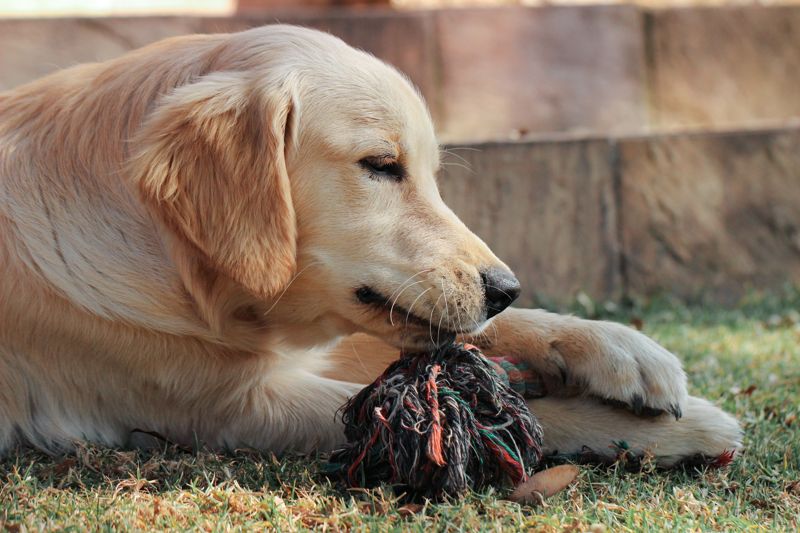
Cover Photo by Laura Alessia: https://www.pexels.com/photo/golden-retriever-chewing-on-dog-toy-15356245/