Planning cover for a Bernese Mountain Dog means looking beyond today’s premium. Owners may need to check whether a dog can join at its current age, how much they would contribute to later claims, whether an accepted condition can remain covered and what separate age limits apply to death benefits. Each of these rules runs on its own timetable.
A Bernese Mountain Dog insurance comparison should also allow for changing needs over the dog’s life. A joining cut-off does not automatically end an existing policy. A percentage contribution changes the owner’s share of an eligible bill rather than deciding whether the treatment qualifies. Lifetime cover can support later care only while renewal remains uninterrupted and the claim continues to meet the terms.
Use breed context without predicting an individual outcome
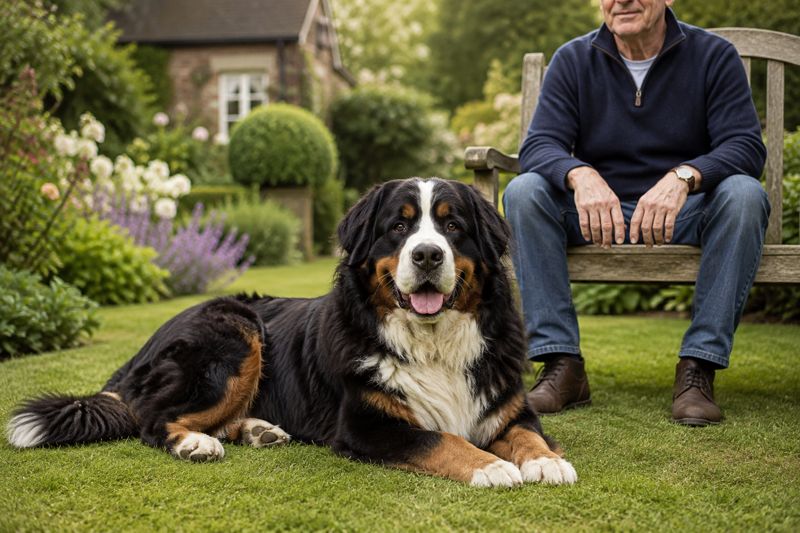
The Bernese Mountain Dog is a large breed and is characterised as comparatively short-lived among large dogs. No numerical lifespan or comparative study is established here. A reported tendency towards shorter longevity does not alter an insurer’s stated calendar age, and there is no evidence that breed size, longevity or health associations caused any provider to choose a particular threshold.
Cancer is reported in literature about Bernese Mountain Dogs. Hip and elbow dysplasia are commonly reported in large dogs generally. These associations do not provide a prevalence rate or predict the health of one dog. A veterinary professional must make any diagnosis and decide on care. The reports simply explain why owners may want enough capacity for treatment in later years.
Check joining rules at the life stage when you buy
New-customer access varies. Waggel, Agria, ManyPets, Animal Friends and Sainsbury’s Money are reported as having no maximum entry age. This does not establish claim eligibility or guarantee a fixed premium. Napo requires a new dog to join before its fifteenth birthday. Direct Line’s standard joining window for dogs runs from eight weeks to age 11. These are entry rules, not automatic end dates for continuously renewed cover.
Some providers apply separate rules to selected breeds. Petplan Covered For Life normally requires a dog to join before age eight, but some unnamed breeds must enter before five. Direct Line lowers its maximum entry age to six for certain breeds described as having shorter expected lifespans. The information reviewed does not confirm whether a Bernese Mountain Dog appears on either affected list. The quote, schedule or Certificate of Insurance must settle that point. It should not be inferred from breed size.
Budget for a changing share of eligible claims
A percentage contribution is paid in addition to any fixed excess. Among the age-triggered examples reviewed, a 20% contribution begins at the first renewal after age seven with ManyPets, at age eight with Animal Friends and Sainsbury’s Money, and at age nine with Napo.
Petplan’s standard 20% contribution begins at renewal after age ten, although dogs named on the Certificate can face an age-seven threshold. Other providers do not use a later birthday trigger. Agria charges 10% co-insurance from the start of the policy alongside a fixed excess. Direct Line has no percentage contribution at any dog age. Waggel’s 20% contribution is optional at every age.
These structures affect what an owner pays after a claim is accepted. They do not establish whether treatment is covered.
Choose annual headroom for later treatment
Annual capacity is separate from the length of cover. Waggel, for example, lets customers select annual veterinary-fee cover from £1,000 to £15,000. All eligible veterinary claims made in that policy year draw on the chosen allowance. Its fixed excess can be selected from £0 to £500 and is charged for each condition claimed in each policy year. The same ongoing condition can therefore attract the excess again after renewal.
For scale only, broad veterinary charges for a course of cancer treatment range from £3,000 to £8,000 in one policy year, with higher costs possible. This is not a Bernese-specific estimate, quotation, guaranteed bill or promised insurance payment. It is useful only when thinking about how much yearly capacity a household could need.
Keep eligible treatment continuous through renewal
Treatment at a later age can remain payable only while the policy renews without interruption and each claim continues to satisfy the terms. Lifetime wording restores the yearly allowance, but it does not make every cost eligible or remove the selected ceiling.
Continuity does not freeze the premium. Waggel says renewal pricing may reflect the dog’s age, claim history and inflation. No premium quote, breed loading, weighting formula or guaranteed increase is established, so these factors cannot support a price forecast for an individual dog. Owners need both enough annual cover and a renewal premium they can continue to afford.
Review death benefits on a separate timetable
Death benefit sits apart from veterinary-fee cover. Petplan’s standard illness-death benefit ends at renewal after age eight, or after age five for selected unnamed breeds. Animal Friends ends illness-related death cover at age eight but retains accidental-death cover; its age-adjusted payment is capped at £500. Agria sets a breed-dependent maximum age for the benefit in its schedule.
Waggel bases its payment on purchase price, caps it at £1,000 and reduces it as the dog gets older. It makes no illness-related death payment after the dog has passed eight. Payment of a death or loss claim ends the policy. None of these age rules means that eligible veterinary treatment stops at the same point.
Compare the timelines rather than one headline age
A new-customer cut-off, a trigger for the owner’s percentage contribution, the annual allowance, repeated excesses and the death-benefit age are distinct. One does not automatically start or stop another. Where a selected-breed list is unpublished, use the actual quote, schedule or Certificate rather than guessing.
For veterinary treatment in later life, uninterrupted renewal preserves a possibility, not a certainty. Claims must remain eligible under current terms, the yearly allowance must have room and the premium must remain affordable. Provider terms can change, and breed context cannot replace the conditions issued for an individual dog.