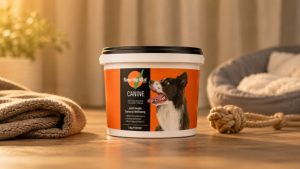

Dog supplements occupy a growing space between everyday nutrition and veterinary care. Pup Labs, a Wilmington, Delaware-based direct-to-consumer company, approaches that space with vet-formulated products for specific canine health concerns.
Its range spans digestion, mobility, dental care, immunity, skin, ears, weight, urinary health, and senior wellness. The central question for owners is not whether every dog needs supplements, but what “vet-approved” means and whether a formulation fits an individual dog’s needs.
What “Vet-Approved” Means in Practice
Pup Labs describes its supplements as science-backed, vet-formulated, and “Vet Reviewed and Approved.” The brand cites veterinary expertise, including commentary from Dr. Randy Aronson. For consumers, this is most useful when considered alongside ingredients, intended use, and veterinary advice, rather than as a universal recommendation.
That distinction matters because supplementation is generally targeted. Professional veterinary guidance supports certain ingredients and products for defined purposes. Research on the probiotic Enterococcus faecium SF68, for example, has found benefits for digestive balance and diarrhea incidence. Joint-support discussions commonly include glucosamine, chondroitin, MSM, omega-3 fatty acids, and UC-II collagen. Cornell veterinarian Dr. Frye has noted that joint supplements supported by published literature may help slow osteoarthritis progression.
The same principle applies to skin and oral care. Dr. Sylvia Berns has discussed omega-3 fatty acids for inflammation, skin-barrier support, and coat health, while the American Veterinary Medical Association notes the use for skin-related concerns.
In dental care, the Veterinary Oral Health Council accepts products supported by evidence of plaque or tartar reduction. Dr. Fraser Hale has cited VOHC-tested HealthyMouth data showing plaque reduction of up to 78% without side effects. These examples show why “vet-approved” matters most when a formulation connects to a defined health goal.
A Product Range Built Around Specific Problems
Pup Labs organizes its range by health need rather than offering one generalized supplement. Digestive products include K9 Belly Bliss, Tummy Essentials, and probiotics. The company’s gut-health messaging focuses on the microbiome and the gut-brain axis, describing the gut as a dog’s “second brain.” Joint and mobility options include Freedom Joint Drops or chews and a glucosamine product.
Elsewhere in the range, ProDenta is a dental powder positioned for tartar, teeth and breath concerns. A9 Ear Clear addresses ear care and itching, while Canine Immune and Canine Soothe sit within immune, allergy and skin support. K9 Slim is intended for weight management through appetite support. The company has also expanded into urinary support and maintains a senior-dog collection.
That breadth may help owners compare needs across life stages. Someone researching Yorkshire Terrier Puppies, for instance, may have a very different routine than an owner managing mobility or dental concerns in an older dog. A supplement category alone does not establish necessity; age, diet, symptoms, medications, and veterinary assessment still shape the decision.
Ingredient Transparency and Root-Cause Positioning
The company positions itself against proprietary blends and fillers, emphasizing high-quality ingredients and formulations intended to address underlying biological factors rather than temporarily masking symptoms. This is especially clear in its digestive-health focus, where microbiome support is presented as connected to broader immune and nervous-system function.
When shopping at https://puplabs.com/, the practical value lies in being able to examine what a product is designed to do instead of relying on the phrase “vet-approved” alone. Ingredient identity, serving information, intended use, and the evidence behind active components are more informative measures of suitability.
Pup Labs also says its products are manufactured in the United States and covered by a 180-day money-back guarantee. The company reports more than 100,000 happy customers and over 200,000 email subscribers. Those figures indicate scale and suggest their supplements have worked for many dogs.
Market Context and the Value Question
Pup Labs was already an established e-commerce business by mid-2024, with reported annual revenue of roughly $2 million to $3 million. Its marketing strategy has included paid-media spending reportedly reaching $750,000 to $1 million monthly, alongside a shift toward organic search and educational content.
The wider pet-health market helps explain the attention. Estimates vary by methodology. Nova One Advisor valued the U.S. pet dental health market at $3.15 billion in 2024 and projected $5.95 billion, with a 6.57% compound annual growth rate for 2025-2034. Other research places the U.S. pet dental health market at $2.59 billion, projected to reach $4.53 billion at about 6.55% CAGR through 2033. A separate U.S. dog dental-care estimate puts the market at $1.2 billion in 2024 and $2.5 billion by 2033, a 9.1% CAGR.
Demand is linked partly to preventive care. Industry research commonly reports periodontal disease in about 80% of dogs by age three, while dogs represented 57.7% of a related pet-supplements market in 2023. E-commerce access and preventive formats such as powders, chews and additives have also widened consumer choice.
What Owners Should Take From the Brand
Pup Labs, whose DTC focus is currently the U.S. market, occupies a defined position that’s problem-specific and built around veterinary review and science-led messaging. Its catalogue covers common areas where owners seek added support, from digestion and joints to dental, skin, ear and senior care.
Still, the strongest case for any supplement depends on fit, not branding. “Vet-approved” can signal professional input, but owners should also consider the active ingredients, supporting evidence, dosage, existing diet, and the dog’s health history. Supplements may support care in appropriate cases; they don’t automatically replace balanced nutrition, exercise, dental care, diagnosis, or veterinary treatment.
For Pup Labs, the practical point of differentiation is therefore its targeted range and stated emphasis on transparent, researched formulations. For owners, the more important consideration is identifying the problem being addressed, reviewing the evidence behind the chosen ingredients, and confirming with a veterinarian that supplementation belongs in that particular dog’s routine.
Image by Valeriia Boiko on Canva